
Soft Capital, Strong Communities: Emerging Housing Finance Models for Equity and Belonging
What if the greatest barrier to home ownership wasn’t income or credit—but the lack of early, flexible capital that trusts people first?
From Cincinnati to Denver, South Bend to Boise, innovators are piloting early-stage soft capital tools that build equity, permanence, and community control—often bypassing traditional credit barriers or down-payment hurdles. We will be showcasing these cutting edge Innovations at Neighborhood Economics in Chicago.
1. Cincinnati’s Renter Equity Plan (Cornerstone Renter Equity / Diversified Community Investment Fund)
In Cincinnati’s Over-the-Rhine, Cornerstone’s Renter Equity Club enabled low-income renters to earn equity credits over time—by paying rent on time, participating in community life, and engaging with coaching services. Over a 2019 pilot, participants accrued savings toward future homeownership while anchoring community stability. This effort sits within the broader idea of a Diversified Community Investment Fund (DCIF)—a locally rooted investment vehicle that combines real estate, local business, and community projects, sharing returns with investors who are also community residents. https://reasonstobecheerful.world/cincinnati-renters-build-equity-with-each-payment/
2. CDFI Friendly South Bend’s “Alternative Equity” via Credit Union
CDFI Friendly South Bend and housing-focused Cinnaire partnered to provide development credit lines—structured as alternative equity, not conventional debt—for local developers rehabbing homes that create affordable ownership opportunities in underserved neighborhoods. The prospective homeowners don’t have the liquid assets for a downpayment on a loan, or collateral, so something that acts like equity is the. Way to home ownership. https://cinnaire.com/cinnaire-partners-with-property-bros-cdfi-friendly-south-bend-to-develop-affordable-homes-for-south-bend-families/
3. Parity Homes, Baltimore—Community-Anchored Up-Front Capital
In West Baltimore, Parity Homes has acquired abandoned homes block-by-block, rehabilitating them to offer deeply affordable ownership. Their model has involved securing advance commitments from around 20 aligned buyers—families and community supporters—investing early to restore neighborhood vitality and create a stable safe community. After four years founder Bree Jones has proven her demand centric model to the point that she has secured a $2 million grant for the pre development finance, that is going to let her and her community of buyers to break ground. Jones was motivated to create a safe neighborhood for Black children after the death of Travon Martin, who was unarmed but shot and killed by a man who imagined him to be a threat as he walked through what should have been a safe neighborhood on the way to the store. https://www.parityhomes.com/
4. The Dearfield Fund, Colorado—Philanthropic Down-Payment Equity
Gary Community Ventures launched the Dearfield Fund for Black Wealth to close the racialå homeownership gap in Denver. It provides up to $40,000 in down payment support to qualifying Black homebuyers who can afford monthly mortgage payments but lack enough savings for closing. Assistance is repaid upon sale or refinance, along with a share of appreciation—creating shared-investment capital with philanthropic roots. https://www.dearfieldfund.com/
5. New Way Homes—Church Land as Long-Term Equity Generation
New Way Homes partners with mission-aligned landowners—often Black congregations—that own land but lack capital or development experience. Through long-term ground leases, New Way builds affordable housing (apartments or single-family homes) priced at cost, enabling congregations to retain land ownership and earn an annuity—often around $1,000 per unit monthly—while preserving affordability and purpose-aligned stewardship. https://greenmoney.com/new-way-of-developing-affordable-housing-through-partnerships-with-churches/
Why These Models Matter
- Early, Patient Capital: Bridges the gap before traditional loans or subsidies kick in.
- Shared & Aligned Returns: Investors, residents, and institutions all benefit—economically and socially.
- Asset Ownership or Equity Growth: Even renters or low-wealth buyers accumulate wealth or control over time.
- Place-Based: Impact Capital is deployed where people live, fostering neighborhood trust and resilience.
- Embedded Governance: CDFIs, nonprofits, residents, and congregations govern the terms together.
Toward Scaling: Challenges & Opportunities
- Raising patient capital at scale: DCIFs must combine crowdfunding, philanthropic endowments, mission-aligned investors.
- Technical assistance: Not every local group has experience with leases, equity caps, or governance structures.
- Sustainability & replication: Coordination across sectors is needed for continuity and scale.
- Policy support: Land banks, flexible zoning, and trust-friendly policies can enable these models.
What This Session Explores
- How soft capital tools shift the burden away from debt-finance to equity-building, stewardship-centered models.
- The legal mechanics behind DCIFs, shared-equity contracts, and ground leases.
- Lessons from startup pilots in Cincinnati, South Bend, Baltimore, Denver, and faith-rooted models.
- Pathways to scale involving investors, CDFIs, congregations, and residents.
Final Thought
Together, these early-stage innovations rewrite the financing script: centering equity, patience, institutional stewardship, and community ownership. In Chicago and beyond, lawmakers, funders, developers—and especially congregations and residents—can build a housing finance architecture rooted in trust, care, and shared prosperity.
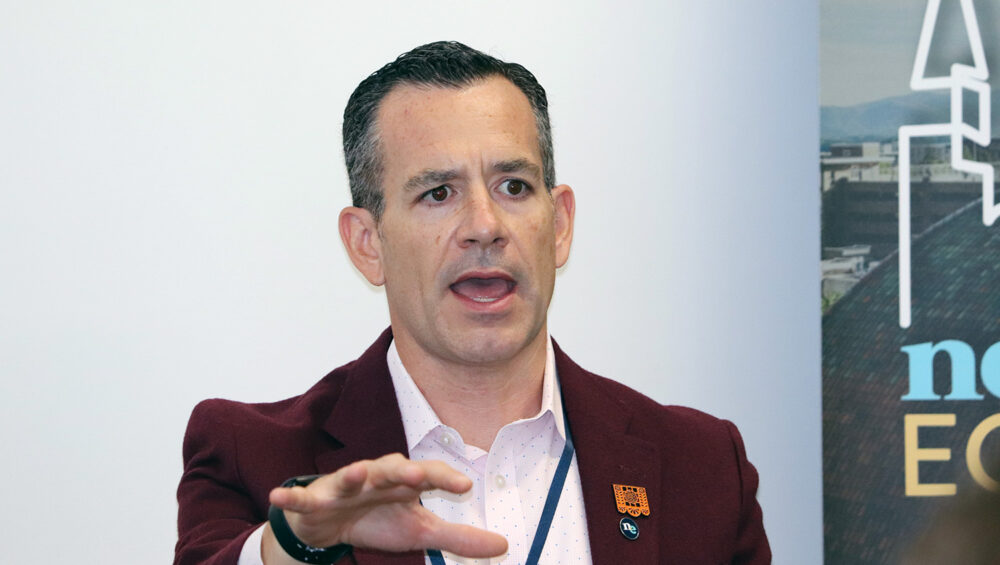
Image: Sam Centellas, Executive Director of CDFI Friendly South Bend, at Neighborhood Economics Chicago 2025.
📣 Let’s Build What’s Next
Neighborhood Economics is a place where new partnerships begin. Join us this fall or read more real-world examples of how we’re helping transform local economies from the inside out.