
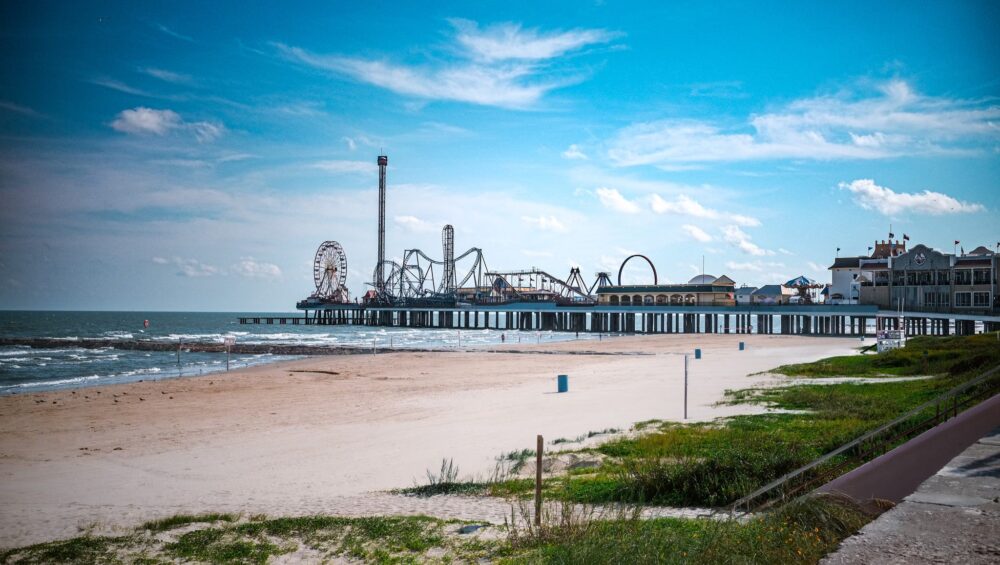
This piece by Lorie Baker originally appeared on BohoHippieHistorian and is republished with permission. Photos by Lorie Baker.
Joe Minicozzi, who runs the property-data firm Urban3 out of Asheville, stood in front of a ballroom in Galveston with a parcel map of Buncombe County, North Carolina, walking the room through what his own county’s tax assessor had quietly done to his neighbors. Four point four million dollars redirected away from public schools in a single year, enough to cover more than a hundred teachers’ salaries, and none of it required a vote or a scandal. It required a property tax formula that already existed, working exactly the way it was built to work.
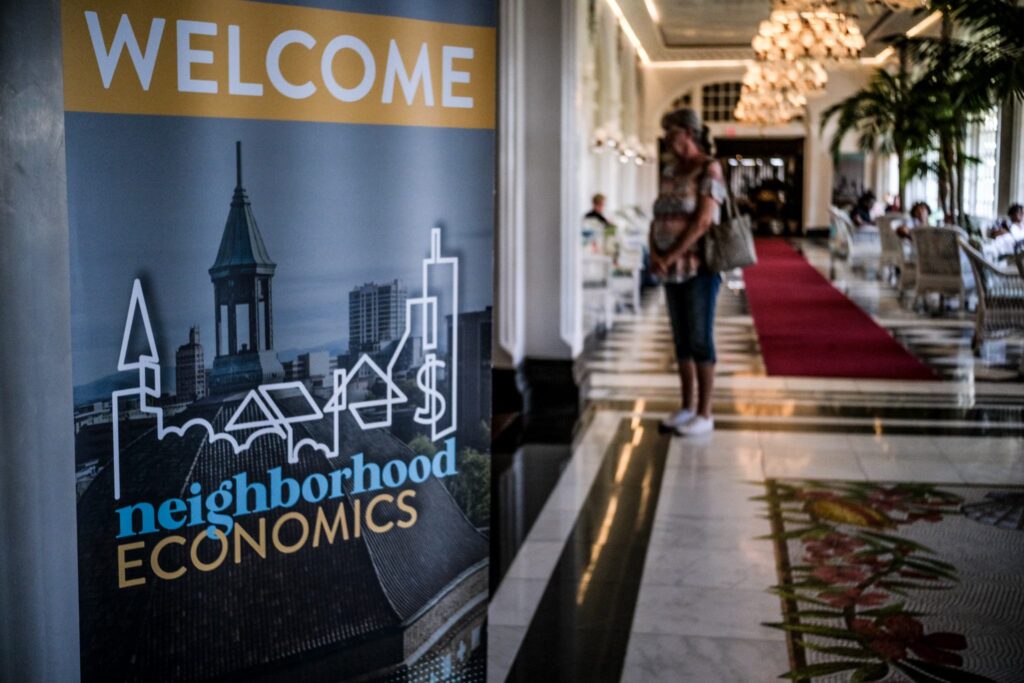
Neighborhood Economics doesn’t run programs in the traditional sense. It convenes. Community leaders, impact investors, foundation staff, faith leaders, bankers and artists move between plenaries and breakouts for two days on the theory that many of the people capable of moving capital into disinvested neighborhoods simply don’t know one another. Galveston was one stop in a circuit that has also included Chicago, Asheville, San Antonio, Jackson, Portland and Indianapolis. The premise, more or less, is that repairing what decades of redlining and disinvestment did to a place isn’t primarily a moral problem waiting for more goodwill. It’s a plumbing problem. The money exists. It’s routed wrong, blocked somewhere upstream, or held by people who have never met the people already doing the work on the ground. It’s a version of something Peter Block has spent decades building into a philosophy of community: a neighborhood is rarely short on gifts. What it lacks are the relationships that allow those gifts to find one another.
Minicozzi’s argument, worked out parcel by parcel over years, is that the plumbing may be broken long before anyone arrives talking about new investment. Assessors in tourist counties like his, he argues, have valued short-term rentals as though they were ordinary houses instead of the small hotels they function as, while simultaneously undervaluing expensive property relative to homes farther down the income ladder. He calls it a reverse Robin Hood, and in Galveston he laid out the forensic trail behind that claim: Florida corporate filings used to trace an Asheville short-term rental through a chain of LLCs to its actual owners, cap-rate calculations showing how a commercial appraiser might value the same property, and the example of a vacation rental commanding roughly $7,000 a week while being taxed as though it were worth a fraction of what an investor had recently paid for it.
He didn’t stop at publishing the data. Minicozzi talked two friends into helping him confront the system in person, one of them from the urban planning organization Strong Towns, and together they showed up at the state assessors’ conference, with his colleague dressed like a judge, and forced a floor debate over whether Airbnbs should be assessed like hotels. Only 41 percent of the assessors in the room said yes.
Back home, Minicozzi started organizing residents to formally appeal their own property assessments with the help of what he described, somehow completely seriously, as a puppet named Little Ginger. Appeals in his county went from a typical six percent of homeowners to 27 percent. Eventually the state Realtors Association called to warn him it would lobby the county commission against him.
Kevin Jones, who co-founded Neighborhood Economics, sees the same fight resurfacing in cities that otherwise look nothing alike. His explanation makes Minicozzi’s Asheville numbers feel less like a local quirk and more like a recurring feature of the system. Property-tax assessments, Jones said, often use algorithms that effectively regress toward the mean. Put a million-dollar house in a neighborhood of hundred-thousand-dollar houses and, depending on the assessment methodology, the expensive property can end up undervalued while the cheaper properties around it are pushed upward. In practice, he said, poorer homeowners can end up subsidizing wealthier ones through the mathematics of assessment itself, on top of the consequences of decades of disinvestment.
Jones has watched coalitions in places like Chicago and Orange County fight for reform by building alliances across income, race and faith. In one case, organizers focused the coalition on something people with very different politics could agree on: investor-owned short-term rentals receiving treatment they believed should have been reserved for residential homes. His read was blunt. The rules change when people with influence and people without it show up together, and keep showing up long after the first meeting stops feeling exciting.
Convening them, Jones said, is only step one. Every serious change effort needs a particular cast: a system entrepreneur who understands the machinery well enough to move it, a facilitator, what he calls the “mother hen,” whose job is keeping people connected and heard, someone relentlessly focused on outcomes rather than good feelings, and a connected evangelist who can enter rooms of money and power that community members are routinely locked out of. Leave one of those roles empty and the work tends to stall, no matter how good the idea was when everyone first sat down together.
David Erickson, who described himself as working in community development for the Federal Reserve Bank of New York and emphasized that he was speaking for himself, approached the same problem through what he called “making missing markets.” His framework had three parts. There are buyers: people or institutions willing to pay for healthier, safer, more economically viable neighborhoods but who currently have no mechanism for doing it. There are producers: teachers, ministers, coaches, small-business owners and others already producing much of that wellbeing without being compensated for it. Then there are connectors, the people or institutions capable of building the bridge between the two.
Erickson cited numbers large enough to make the abstraction difficult to ignore. Hundreds of billions of dollars, he said, currently sit in donor-advised funds nationally, much of it controlled by wealthy households that have already received the tax benefit for charitable giving but have not yet decided where the money should go. Over the coming decades, trillions more could move through those vehicles as wealth transfers from one generation to the next. His argument wasn’t that the money itself was doing harm by sitting there. It was that enormous pools of capital remain largely disconnected from neighborhood-level work, even though donor-advised funds are not bound by the same fiduciary constraints governing a traditional foundation endowment. The money is there. The on-ramp is not.
Erickson offered examples of what building one can look like: a healthy-neighborhood equity fund in Boston designed to let investors buy into community health outcomes, tax-increment financing structures adapted for health or climate resilience rather than limited to roads and sewer lines, and a Kansas City effort called Local Code using donor-advised dollars to help unlock conventional financing for Black-owned developers. Cincinnati also appeared among the examples, through a shared-savings arrangement involving the school district, Cincinnati Children’s Hospital and large employers such as Kroger around reducing absenteeism. Hearing a Cincinnati effort cited from a stage in Texas underscored how much of this work is already happening locally, even when the people building different pieces of it do not yet know they are part of the same conversation.
A separate breakout on the creative economy pulled at the same problem from another direction: who actually gets to shape a place, and who merely gets invited into a room to talk about it. Kimberly Puryear of Explore Asheville argued that the creative economy is infrastructure, not decoration. Artists and cultural institutions give a place the identity people want to live in, visit and protect, and once something like a historic Black cultural institution or Depression-era amphitheater disappears, money cannot simply recreate the history that vanished with it.
Brian Fernandes-Halloran, executive director of Halloran Philanthropies, and Matt Eldridge of Realize Impact pushed the conversation toward the limits of participation without power. Fernandes-Halloran described a well-funded, well-intentioned dialogue series in which artists of color were invited to name structural problems while the wealthy patron funding the gathering retained exactly as much control after the conversation as before it. The language of critique had been absorbed. The structure hadn’t moved. The answer, in their telling, wasn’t another listening session. It was funding work explicitly designed to redistribute power, including a Detroit sculptor creating a public gathering space with a community land trust. Residents were paid for every planning session, and the design process itself began to mirror the governance structure of the land trust. Nobody had forced those two systems to resemble each other. They converged because a process built around actual shared ownership tends to look recognizably different from one built around consultation.
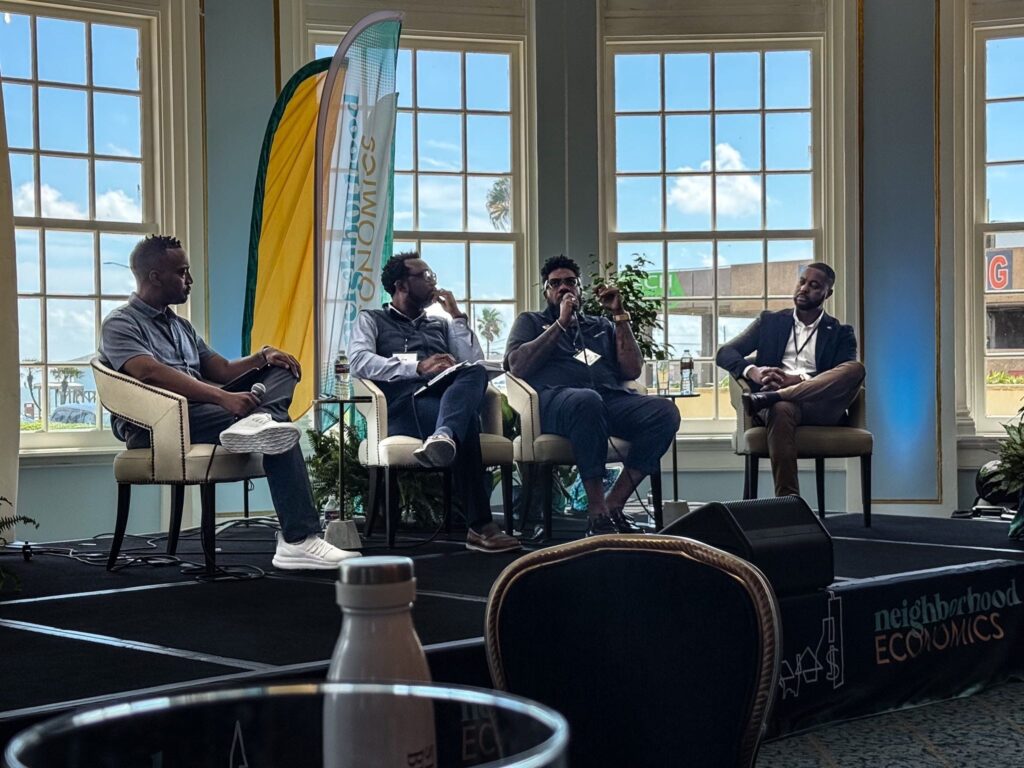
Common Good Alliance’s Derek Peebles with Jay Nwachu of Innovation Works, Allen Woods of MORTAR Cincinnati and Jeremiah Robinson of Dogwood Health Trust joined an additional panel on supporting young entrepreneurs. Woods described starting with a camera at twelve years old and having nobody around him who could explain how professional photography actually worked. Twelve years ago, he and two cofounders built MORTAR so other people would not have to teach themselves every rule after they had already broken it. He compared the organization’s work to Waze: drivers warn one another about potholes and speed traps because somebody ahead of them already hit one. MORTAR does the same thing for entrepreneurs, except the potholes are financing gaps, inaccessible networks, bureaucratic barriers and the thousand small failures of infrastructure that disproportionately wreck businesses owned by Black entrepreneurs and women.
Woods was also blunt about the current funding environment. The wave of racial-equity commitments that followed 2020, he said, has receded, while organizations doing the work are facing more demand with fewer resources. What kept MORTAR alive was never a funding cycle anyway. It was trust. The organization refuses to enter a city without an anchor partner that already belongs there because too many communities have watched outsiders arrive with money, language and promises, only to disappear when the grant ended. Woods has carried that same insistence into Cincinnati City Hall, where he has successfully fought to keep MORTAR in the city budget across multiple mayoral administrations by asking elected leaders whether they are willing to fund the economic-development promises they make publicly.
Again and again, speakers described communities burned by outsiders who arrived with money and a plan, disappeared when the funding did, and called the whole thing impact on their way out. That history wasn’t treated as an unfortunate footnote. It shaped the proposed solutions. That’s why MORTAR won’t enter a city without an anchor organization already there. It’s why the Kansas City work runs through local developers instead of around them. The people gathered in Galveston were not only hunting for what works. They were also trying not to reproduce the exact harm they claimed to solve: showing up uninvited and calling it help.
By then, a phrase had surfaced in nearly every part of the conference: social capital. Erickson said buyers, producers and connectors actually have to like each other before his missing-market model works. He borrowed the Hawaiian concepts of ohana and kuleana to describe communities bound not only by relationship but obligation. Woods put trust before capital and policy when describing a healthy entrepreneurship ecosystem. More than one speaker named social capital as the missing link, the variable determining whether financial capital actually lands inside a neighborhood or merely extracts from it. And almost in the same breath came the problem: no one had presented a way to connect changes in that social capital directly to the financial investments being made around it.
That contradiction may be one of the most important questions Neighborhood Economics is confronting. There are funds for buyers, vehicles for producers, donor-advised structures, tax-increment districts, shared-savings agreements and increasingly sophisticated ways to map the movement of money. Financial capital has instruments, dashboards and models. Social capital mostly floats through the room as a phrase everyone agrees matters. If trust determines whether investment sticks, whether residents participate, whether institutions collaborate and whether a community believes the next person promising help, then treating it as an invisible variable is more than an academic problem. Millions of dollars can be spent in the name of community development without establishing whether the community itself became stronger.
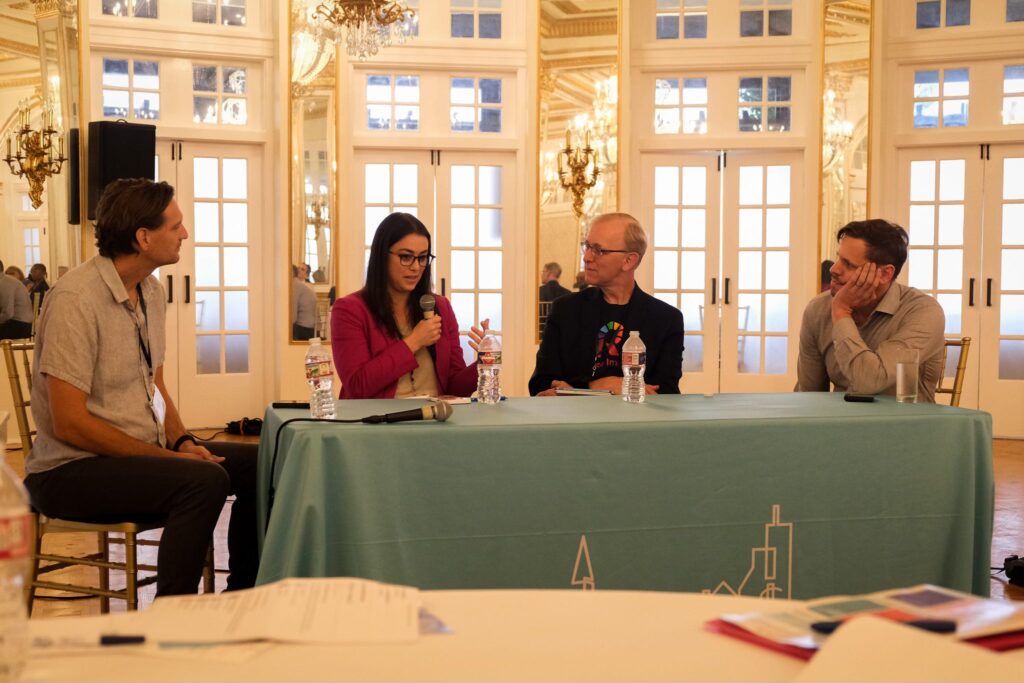
Neighborhood Economics is honest about that gap. It can move financial capital, convene the people who move financial capital, and name social capital as one of the things that determines whether any of it sticks. What it does not yet have is a way to connect those two measures closely enough to show which interventions are actually strengthening a community and which are simply spending money in its name. That isn’t a criticism. It’s an opening.
It is also where Common Good Journalism enters the conversation. In discussions at Galveston, I raised the Neighborhood Economic Vitality Index, or NEVI, which Common Good Journalism has been developing alongside Derek Peebles and Mark Anielski to measure social capital: trust, connection, belonging, ownership and the relationships that allow a neighborhood to hold onto the value being created inside it. The idea is not simply to put a number on trust. It is to build a bridge between social capital and financial capital, so that when money enters a neighborhood there is a way to ask what happened underneath it. Did relationships strengthen? Did people feel greater ownership over what was being built? Did connection increase? Did the investment leave behind more capacity than existed before it arrived, or did money simply move through?
NEVI is meant to make visible something community-development work has often treated as intangible, and then connect that change to what is happening economically. The work begins before the intervention itself: ask people who already live there what trust, belonging, connection and ownership look like before a storytelling residency or other community investment begins, then ask again after the work. If social capital really is one of the things that determines whether financial capital takes root, then the two cannot keep being measured as though they exist in separate systems.
The overlap is now moving from conference conversation into a year of joint work. Common Good Journalism, Neighborhood Economics and the Common Good Alliance, alongside Kevin Jones, Derek Peebles and the broader team, will spend the next year exploring how NEVI can connect measures of social capital with the financial capital already being tracked in neighborhoods. The work will test what becomes visible when trust, connection, belonging and ownership are measured alongside the money moving into a community, rather than as separate systems.
Because moving money into a neighborhood is not the same thing as building wealth there. And if the field cannot tell the difference, it is still measuring the wrong thing.
Editors Note: Thank you to Lorie Baker for sharing her fabulous coverage of our event. You can subscribe to her work here.