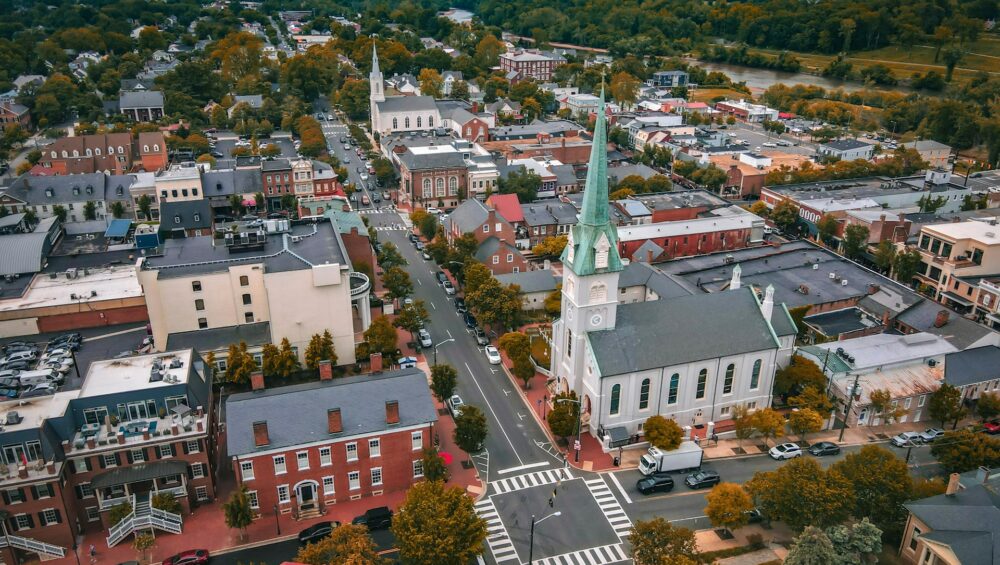
In a recent newsletter, we shared a new report from our colleagues at RootedGood called Windows of Opportunity: Church Investment on Church Land. I spoke with Mark Elsdon, co-founder and co-CEO of RootedGood, to discuss the opportunity at hand for American churches in a shifting environment for the ownership and use of church buildings.
For Elsdon, the overall message of Windows of Opportunity is clear: there is an enormous need for mission-driven housing development, and it can be met by existing money within the church. The problem is imagination. Making the most of this moment means having a willingness to envision churches as responsible owners of assets that can address the needs of their neighbors.
The clear existence of capital for what Elsdon calls a “once-in-many-generations opportunity” is a meaningful call to action for mission-aligned investors. RootedGood estimates $135 million in subsidy is needed to unlock a potential $450 billion in community redevelopment that can realistically happen on church land. Church assets, such as denominational pension funds or foundations, can be mobilized toward these projects to buy down the interest rates of money and therefore cover a percentage of the required subsidy. Other sources of funding are already in place: Low-Income Housing Tax Credits (LIHTCs), historic tax credits, public funding programs, philanthropy, land contributions, and other mission-aligned capital.
Windows of Opportunity brings an air of hope to the problem of declining church attendance and the resulting inability to maintain property. Rather than selling, Elsdon believes churches can look at another worsening problem in America, housing, and be a piece of “the creation of a new class of investments called mission aligned real-estate.”
RootedGood is not stationed just as a researcher suggesting a playbook. The organization actively partners in the effort, namely through the Good Futures Accelerator. The accelerator takes churches through a discernment process to ask what the community needs and what assets in the church’s hands can be applied to address them.
RootedGood’s paper comes at the exact moment when Neighborhood Economics has been highlighting the expanding capital stack. In my conversation with Elsdon, I asked about fractional ownership. One of RootedGood’s partner developers, Threshold Development, has completed two 100% equity projects and started a third. In one project, the contractors who built it are part-owners. Inspired by Diversified Community Investment Funds (DCIFs), this fractional ownership model can be extended to church properties, allowing residents to own part of an important asset in their community. Even further, the New York Fed’s Making Missing Markets campaign includes a design team of faith-based community development representatives.
With dormant church money and federal incentives in place, both sectors have the opportunity to be involved in the funding and administration of community development. Windows of Opportunity is an important contribution to envisioning the creative collaborations that we are called to in a new economic moment. RootedGood will be sharing their paper at the New York Fed’s upcoming Making Missing Markets event in late November.
Windows of Opportunity goes into detail on the case for investment into church property projects, technical options for this investment, and case studies. Still, what may be the most important piece of the puzzle is trusting relationships. Staring down financial projections and project timelines takes adopting a shared vision with investors.
With Elsdon and team shining the light on the capital available in this position paper, the invitation remains open for other mission-aligned investors to join projects and unlock church capital. At Neighborhood Economics, we are continuing to think critically about housing and unique capital stacks. We are ready to connect churches and investors alike with partners such as RootedGood. If you feel a time of discernment drawing near in your context, please be in touch!